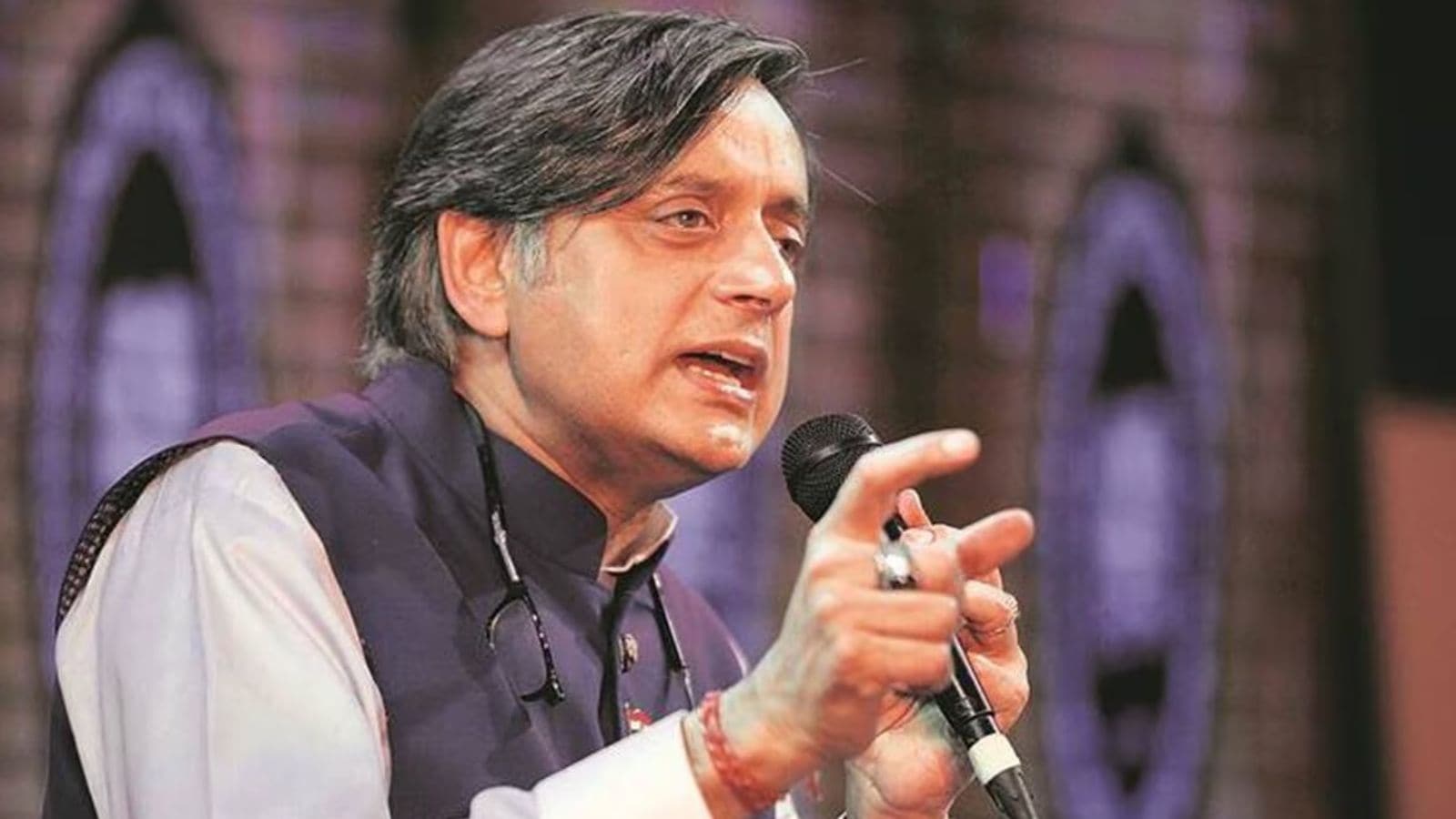
Senior Congress leader Shashi Tharoor has criticized the 1975 emergency emergency declared by the then Prime Minister Indira Gandhi, called it a “a dark chapter” in Indian history. While the party has not officially reacted, Tharoor has uncomfortable calm and their comments have been clear for some time.
In an article published on Thursday in the Malayalam Daily ‘Deepika’, Tharoor reflected in a 21 -month period between June 25, 1975 and 21 March 1977, in which, after the Emergency and the decision of the People’s, it finally excluded Gandhi, cited excesses.

Tharoor, a member of the Congress Working Committee, said, “Sanjay Gandhi, son of Indira Gandhi, forcibly led sterilization campaigns, which became a notorious example of this. In poor rural areas, violence and forced were used to meet arbitrary goals. Thousands of people were removed.
He criticized Indira Gandhi, which is often referred to by the Congress and the Nehru family as “Iron Lady”, to support rigorous functions during the Emergency. “Some people may argue that the Emergency was brought about a temporary order and offered a brief relief from the disorder of democratic politics. However, this violation was the result of converting uncontrolled power into dictator.
‘Permanent mark on Indian politics’
Tharoor said that serious democratic failures were seen in the emergency period. He said, “The silence of dissatisfaction, the expose of fundamental rights such as the freedom of independently collecting, writing and speaking, and the bang for constitutional laws left a permanent mark on Indian politics,” he said. He said that when the judiciary later tried to restore the balance, the initial damage could not be undone.

Referring to the result of the March 1977 general election, Tharoor wrote, “The excesses of that period caused deep and permanent harm to countless persons. Between the affected communities, it leaves behind fear and mistrust. After the Emergency, in the first free election held in March 1977, people clearly responded- Indira Gandhi and their party excluded the party.”
Tharoor urged that democracy should be protected by vigilance. He said, “It is nothing to take democracy lightly. It is a valuable heritage that should be consistently nurtured and preserved. Let it work as a permanent reminder to the people everywhere,” he said.
The story continues below this advertisement
A warning and Congress response
Tharoor said that while India has moved beyond 1975, the lesson has remained relevant since the Emergency. “We are more confident, more developed, and in many ways there is a strong democracy. Nevertheless, emergency lessons remain relevant in disturbing methods,” he wrote.
He warned, “The temptation to centralize power, silence dissatisfaction, and constitutional security measures may reopen in various forms. Often, such a trend may be appropriate in the name of national interest or stability. In this sense, emergency stands as a strong warning. The patron of democracy should always be vigilant.”
Asked about Tharoor’s comments, Leader of Opposition and senior Congress leader in Kerala Legislative Assembly VD Satheson refused to comment, saying, “Tharoor is a member of the party’s functioning committee and it is a national leadership who should comment on the article. He wrote that I have an opinion about the article, but I will not express it.”
Senior Congress leader’s Muraliharan said that the theme of Emergency is not currently relevant. He said, “Discussion on Emergency was not relevant at this time.”
(With agency input)
Emergency (T) Throor (T) VD Sathson Reaction Throor (T) on Emergency Discussion for Congress leaders