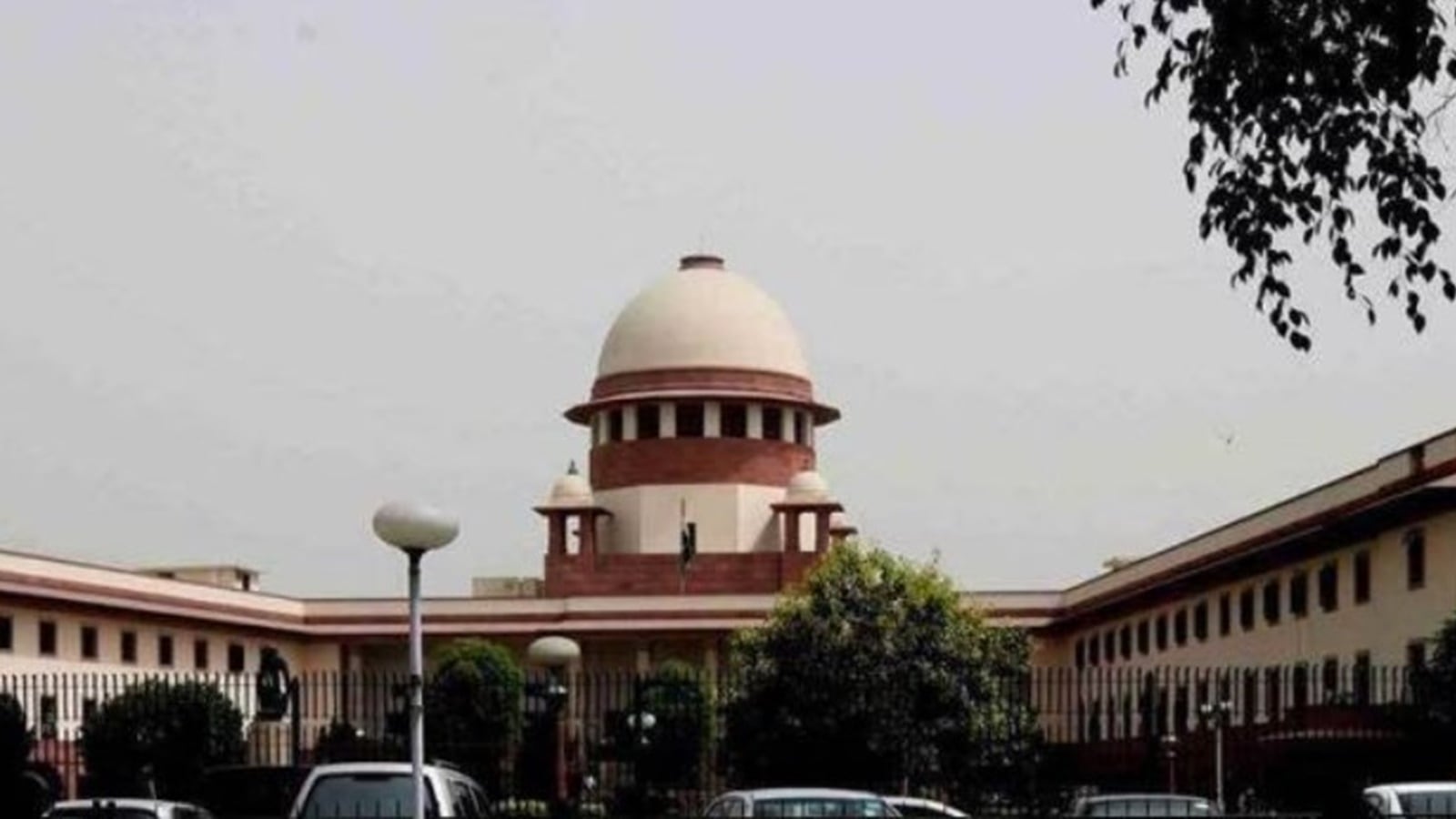
Due to failure to use self-restraint on social media, the Supreme Court on Monday formulated guidelines to control the ‘divisive trend’ on the virtual platform.
Hearing a petition by Wajahat Khan, a resident of Kolkata, on his ‘aggressive’ social media posts, demanding a consolidation of the FIR registered against him in different states, Justice BV Nagrathana presided over the two-judge’s bench and said, “If they want to enjoy the fundamental right of speech and expression, then it should also be.

Stating that “Article 19 is against the state, what you call it – vertical, the judge asked,” What about horizontal? “
Justice Nagrathana said, “One of the fundamental duties is to maintain the unity and integrity of the country … which is being violated. Look at all these divisive trends, at least on social media, should be curbed.”
Then he said, “But to what extent the state can curb? Instead, why can the citizens not regulate themselves? Citizens should know the value of speech and freedom of expression. If they do not, they will be stepped into the state, and who wants to step into the state?”

In the bench, Justice KV Vishwanathan also said, “We will learn to assist a senior advocate for the petitioner and also that you will also assist the state to assist the guidelines issued to the citizens for the state.”
Justice Nagrathana tried to clarify, “We are not speaking about censorship. But in the interest of fraternity, secularism and dignity of individuals … we have to go beyond this petition.”
The story continues below this advertisement
It was on Khan’s complaint that Kolkata Police arrested the law student Sharmishta Panoli on its social media posts from Haryana. He was later granted bail by the Kolkata High Court.
However, it was later revealed that Khan himself had allegedly posted divisive material on social media, and FIRs were lodged against him in Assam, Maharashtra, Delhi and Haryana. During the pendency of cases, the West Bengal Police also registered two FIRs against him and arrested him.
Khan then contacted the Supreme Court, on 23 June that no forced action would be taken against him in other state FIRs or any other FIR which may be registered on the same allegations in future.
On Monday, senior advocate Siddharth Aggarwal said that he was not defending the posts taken by Khan, but he said that he had removed him and apologized for the same.
The story continues below this advertisement
Justice Nagrathana said, however, the misuse of freedom of speech can stop the legal system and wonder what the solution could be. “This is happening in the country. There is no restraint. The freedom of speech and expression is a very important freedom and a fundamental right. If there is an abuse of freedom that is a pioneer for litigation and clogging of courts … then there are other criminal cases that the police can participate rather than chasing such cases. What is the solution?” He said, and said that “we are not from the state’s point of view, we are asking from the perspective of the citizens.”
He further stated that “it is one thing to have an opinion, but to say that there is a misuse in a special way. Sometimes it will not come to court in terms of abusive language.”
Justice Nagrathana supported Justice Vishwanathan’s remarks that the community would help reduce hatred from the fraternity among citizens.
“My scholar brother rightly said that if there should be a fraternity among the citizens, then all this will be reduced,” he commented.
The story continues below this advertisement
Advocate Aggarwal said, “The oxygen of such speech is that people react,” and said that such awareness “essentially can begin a social movement in terms of hate or other types of egoistic speech identity and then initially doing that social boycott.”
Justice Vishwanathan said that it was said “easier than”. ” He said, “When will people start facing it? All the right mind people. All citizens.”
The lawyer appearing for West Bengal said, “All this boils for awareness. It is already nervous, but people will have to realize. It will have to come to self-confidence.”
He said that self-regulation can be difficult because there is a decrease in any editorial monitoring in social media.
The story continues below this advertisement
Posting the case for the next hearing after four weeks, the court sought assistance of the parties, so that it can investigate the flagged comprehensive questions.
Recently, another bench of the Supreme Court, YouTuber Ranveer also demolished the need to regulate social media content without encroaching the fundamental right of Ranveer Allahabadia, free speech and fundamental right to expression.
(Tagstotransite) free speech misuse (T) Supreme Court on Free Speech (T) Wajahat Khan