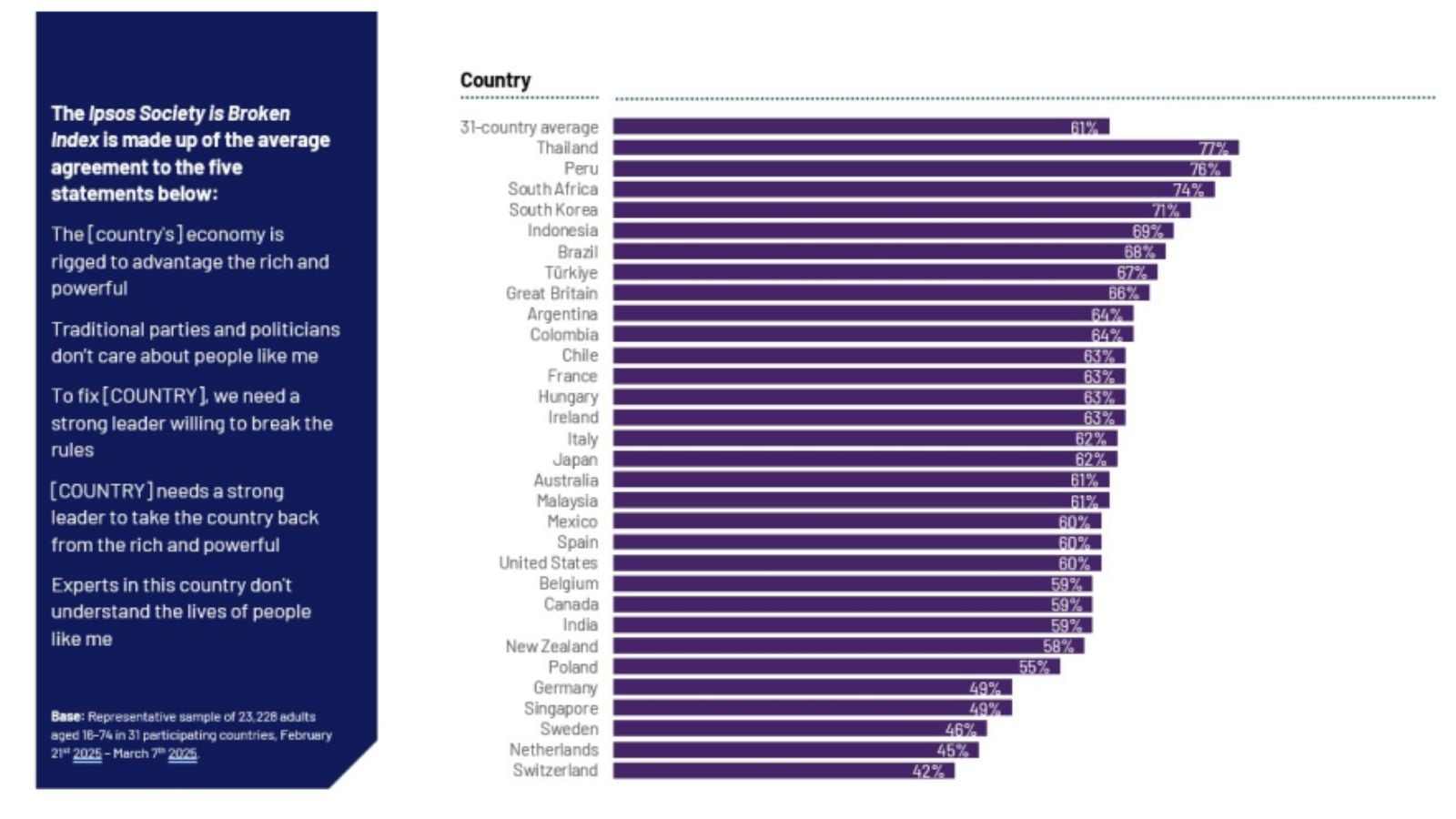
According to the 6th edition of the IPSOS Populism Report, India has made significant progress in some major aspects of localism by meeting the expectations of citizens. The report surveyed 31 countries, in which it was tracked how people around the world feel about the issues of populistism.
In 2025, 59% of Indians agreed to the broken index of the IPSOS system, which is an agreement of five statements – the country’s economy is rich in rich and powerful, traditional parties and politicians to not take care of people like me, to fix that we need a strong leader and a strong leader to fix the country to fix that we need a strong leader to withdraw the country And experts do not understand. This figure is a sign of better and improvement than 2023 and 2016, where 73% and 65% Indians agreed respectively.

Surprisingly, with a decline of 14% compared to 2023 figures, 59% of Indians believe in 2025 believe that the country needs a strong leader who is ready to break the rules. Whereas, 60% of Indians (with a decline of 11% from 2023), believe that India needs a strong leader that can withdraw the country from the clutches of rich and powerful. Similarly, for areas like the country who do not understand the lives of people like me, 59% of Indians agreed, again 14% less in 2023.
Ipsos India CEO Amit Edarkar said, “India has shown improvement in some major areas of populistism, expecting that some of the last few years have been shining unlike the last few years, when a large number of citizens have insisted on breaking the system, and the lack of meritocracy and level playing fields, which is to leave the halidant, which is to leave the halidant. Some of the major aspects are recurring, indicating improvement in areas that were strongly expressed by citizens.
However, 53% of Indians believe that the country has declined today, that is, one of every two Indians, and this figure shows a sharp inclination of 31% from 2016. This can normally be the result of dissatisfaction of people from society and derogatory value system in generations.

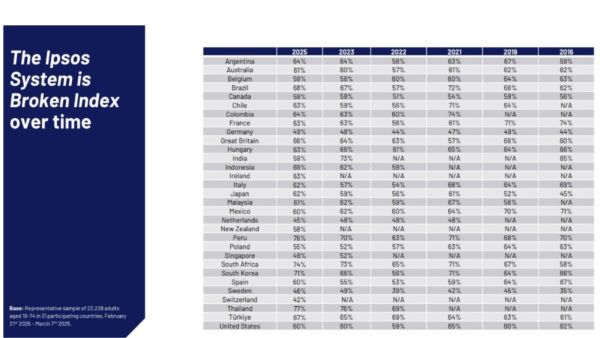 This figure is a sign of better and improvement than 2023 and 2016 surveys, where 73% and 65% Indians agreed respectively. (Photo Credit: Ipsos press release)
A strong case for national identity
The survey also draws attention to the prominence of various aspects of national identity among Indian citizens. 73% of Indians believe that it is the duty of a nation citizens to protect their country for criticizing it.
According to the survey data, about 70% of the citizens believe that the right to vote, to be able to give their opinion, to be born in their own country, behaving with the same level of respect with people of different backgrounds, and being part of a religious majority are all parts of national identity.
The story continues below this advertisement
Where should the government give priority to spend?
Indian citizens also voted that in which areas the government should increase its expenses. And, more than 70% of citizens agreed that job sector (to create more employment opportunities) in major areas; Education sector (school, university and job training); Public safety (enforcement of law, fire and emergency services); Defense and National Security (military); Healthcare (prevention of disease, diagnosis, treatment and research); Infrastructure (construction of roads and bridges, securing rail and air networks, and providing water, electricity and broadband connectivity). 64% of people agreed to focus on reducing poverty and social inequality.
Immigrants and elbows were seen negatively by the public
Most citizens believe that at the time of job shortage, employers should prioritize the locals on immigrants. In 2025, 62% of citizens support this approach, although since 2023 this feeling has reduced by 15%. Along with implementing strict policies to curb immigration, the government has also declined in public concerns on immigrants “taking away” jobs.
When it comes to the elite, the public opinion is divided. Around 52% of Indians saw Elights as a tightly knit group, sharing the same approach on major issues, while 48% see them as a diverse set of individuals with different interests. Additionally, 44% of citizens believe that elite really feels that their decisions are for better, even if it is not true. Meanwhile, 21%, one in about five, feels that the clans mainly decide for their own benefit, disregarding the interests of the common people.
,