Tariffs are essential taxes that countries impose on imports to protect their domestic industries. When a country wants to mold local producers with foreign competition, it imposes taxes on imported goods.
Under the World Trade Organization (WTO), each member country presents a tariff schedule. This schedule outlines the maximum tariff on a country that can be planted on each product. These are called “bound tariffs”. Once interacting and finalizing, the countries do not agree to cross these borders. For example, if India comes in its WTO schedule that the tariff on the glass is 40 percent, then it becomes bound tariff. India can reduce it in the future but it cannot increase it above 40 percent.

Until some time ago, most countries followed their WTO commitments and operated within those agreed boundaries. The problem began when US President Donald Trump began openly violating these rules. The tariffs he imposed, they break at least two major WTO principles, first by applying different rates at different sources, by applying country-specific tariffs on a wide range of goods and second place. The WTOs need countries to treat imports from all member countries equally, so this step is a clear violation that reduces the great foundation of the WTO system.
https://www.youtube.com/watch?v=zaeglx4kqvww
India’s approach to trade deals
Today, every country talks about free trade agreements (FTAs) such as they are motivational power behind global trade. In fact, less than 20 percent of the global trade is through the preferential route, through free trade agreements or FTA. The remaining 80 percent of the WTO is the most premature (MFN) under tariff. For countries like India, we need to focus on 80 percent of trade that does not depend on FTA to develop our exports meaningfully.
India has rapidly deployed FTA as an important tool to promote exports. Initially, our strategy was “look at the east”. We began signing FTAS with our neighboring countries under SAFTA (South Asian Free Trade Zone), then moved to ASEAN, Japan, South Korea and later to Australia. At one point, we were close to signing an agreement with China through the Regional Comprehensive Economic Partnership (RCEP), but we retreated at the last minute.
After covering most parts of the east, we moved our attention to the west. We signed the FTA with Mauritius, UAE, Switzerland and Norway. Now we have announced the completion of talks with the UK and it is expected that we will sign agreements with the US and the European Union in the near future.
Once they finalize them, India will have FTAs with more than 75 countries, which will include about 75 percent of global trade. So when we started late in comparison to Europe or UK, we are catching fast.
The story continues below this advertisement
Why some countries have more tariffs than others
On the surface, the average tariff in countries such as the US is about four percent while India’s average is close to 17 percent. However, it is the result of a large, conversation disposal under tariffs and business and general agreement on WTO, which the US helped the broker and now easily ignored.
During these dialogues, global leaders in developed countries such as the US, European Union and Japan, then industrial and high-tech goods, wanted two things: one, one, to make it easier to sell low global tariffs. Two, intellectual property rights and services, such as finance, telecommunications and IT and agricultural subsidy, to expand the scope of the global trade system just beyond goods.
Developing countries like India and China were seen as the production of low-end goods and weak intellectual property structure. Thus, developed nations drafted intellectual property rights, or trips to bring intellectual property (IP) enforcement under the WTO, in view of its strong controversy settlement system. The result was a trade and closure: developing countries accepted strict rules on IP and services. In turn, they were allowed to maintain some more tariff levels for long periods.
As part of this agreement, each country presented the “schedule of commitments” to the World Trade Organization for each product. For example, for glass, India may have its maximum tariff, or “bound tariff”, would be 40 percent. These programs were interacted and accepted by all WTO members.
The story continues below this advertisement
On terms of reference for Indo-American deal
Once the scope is set, the real talks begin. Each country studies its domestic industries and identifies products and industries that it wants to save, which he considers sensitive areas. For India, these include some agricultural products to protect farmers and some industrial goods. After industry-wide consultation, the country prepares a “offer list”, based on which tariff lines are listed in the Excel sheet. (There are about 12,800 of them in India.) In that list, it indicates which tariffs we will reduce and the time and range of these cuts. The items to be completely excluded will be recorded in the negative or exclusion list.
After the two countries exchanged their offer lists, they can choose to send each other’s request list, asking the other to rethink the other. This process continues on several rounds, often it takes months or years. They announce the completion of the talks only after these are resolved, after which the legal team finalizes the text and the leaders of the countries sign the agreement. The agreement, usually, becomes effective after two to three months of signing. When the real trade benefits are – such as low tariffs and better market access – begin to kick.
Viewers questions
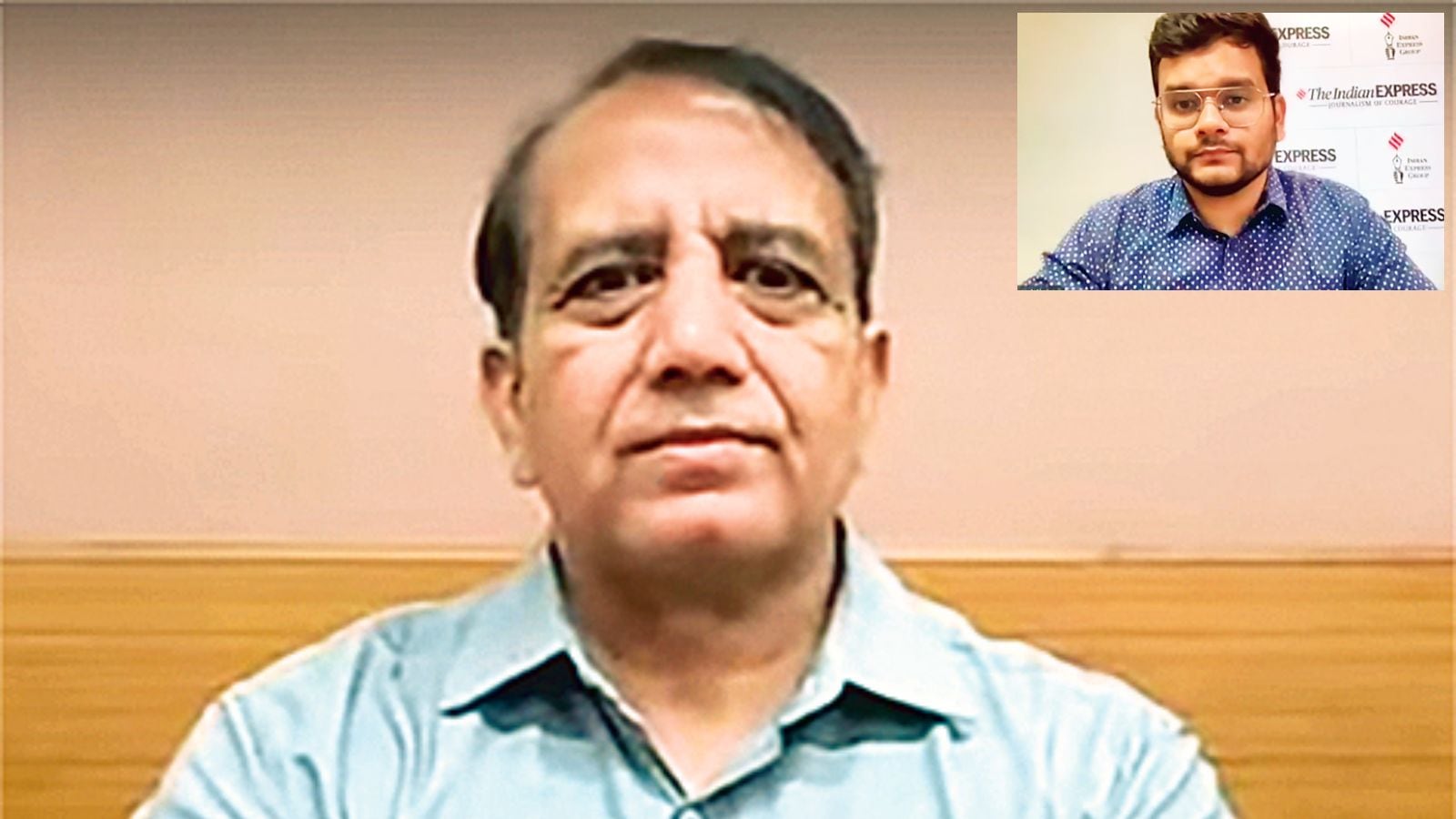
How can India deal with tariffs and improve trade deficit
We need to keep a wide watch on our entire tariff structure. Right now, in every Union Budget, we make incremental changes – increase the tariffs here, reduce them there – but what we have not done is a complete review of all 12,800 tariff lines.
When I made a simple analysis, I found that more than 90 percent of our total customs revenue comes from five percent of our tariff lines. Meanwhile, lower 60 percent of tariff lines contribute less than three percent of revenue. So we have to ask why we are maintaining tariffs on those lines. A fully review can help us fix other long -standing issues, such as inverted duty structures, where the import duty on raw materials is higher than that of the finished goods. This discourages domestic manufacturing as it makes local production less competitive.
The story continues below this advertisement
It has been more than 25 years because we have last done a full tariff overhaul for the last time. It is now time to see the structure overall again. Given the number of FTA signed by us and structural issues in our system, this is a proper, data-driven review time. It is not just about revenue, it is about the tariff to be more logical, targeted and combined with our comprehensive economic goals.
Despite having a big potential, India’s slow global trade development compared to China
In the late 1980s, India was ahead of China in many regions. We were exporting more computer hardware. Our drug exports, APIs and yogas were stronger than China. In textiles and clothes, we were neck and neck. When liberalization came, we focused more on deragulation without simultaneous construction of real manufacturing capacity.
On the other hand, China used the same period for the construction of the region by the region, with vision and intentions. They started with textiles and clothes, went into machinery and then into electronics. He scored systematically in industries. Importantly, they had strong support from American companies. What did China do differently? He implemented highly strategic, foresight policies and executed them well. In contrast, we continue to talk about increasing manufacturing share in our GDP, while the most basic items – knives, nail cutters, nuts, bolts. This is not for lack of advanced technology, we have never drilled deep in product levels for the manufacture of competition.
We need long -term commitment. We need to prevent bureaucrats in charge of this change and instead identify those who have experience on their hands and strengthen them, set clear goals and move forward. In this way we change the business equation by constructing from the ground.
Deal (T) India US Tariff Cuts (T) Trump India Tariffs Declaration (T) India US Trade Agreement (T) Modi Trump Trade Talk (T) India US Economic Relations (T) India reduces tariffs for India US